Battery Technology Leaps In Recent Phones
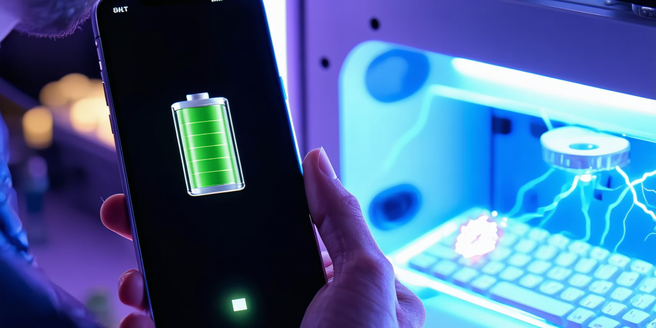
Understanding Modern Battery Composition
Modern batteries in smartphones primarily use lithium-ion technology, known for its high energy density, lightweight, and rechargeability. These batteries consist of a graphite anode and a lithium cobalt oxide cathode with electrolytes facilitating ion exchange. Recent advancements involve the incorporation of silicon into anodes, allowing for higher energy storage and improved efficiency. Researchers are also exploring solid-state batteries, which replace liquid electrolytes with solid materials, reducing flammability and increasing safety. The chemistry is evolving with additives improving thermal stability and lifespan, making them promising for sustainable smartphone power sources. Understanding these compositions helps manufacturers produce more robust, safer, and more energy-efficient batteries, while continually enhancing user experience.
Fast Charging: Breaking Time Barriers
Fast charging has revolutionized how we perceive phone battery life, reducing the need for prolonged charging periods. This technology utilizes increased wattage and optimized circuitry to push more current into batteries in a shorter span. Modern phones equipped with fast charging can achieve a 50% charge in 30 minutes, a significant improvement over traditional methods. Proprietary technologies, like Qualcomm’s Quick Charge and USB Power Delivery, focus on maintaining optimal temperature to prevent overheating. Fast charging not only enhances convenience but also aligns with fast-paced lifestyles, ensuring users stay connected without lengthy interruptions. With ongoing research, fast charging capabilities continue to push boundaries, promising even more rapid solutions in future.
Longer Life Cycles: What’s Changed?
Smartphones today prioritize battery longevity, thanks to advancements in materials and smart charging systems. By integrating advanced battery management systems, modern phones can optimize charging patterns to reduce wear and tear. Cycle life indicates how many complete charge-discharge cycles a battery can undergo before diminishing below 80% capacity. Innovations such as adaptive charging, which slows down when nearing full charge, help minimize wear. Utilizing AI and machine learning, phones now learn users’ habits to optimize charge cycles. Battery longevity helps reduce electronic waste, aligning with environmental goals. These enhancements ensure that users experience extended battery life, maintaining device performance over several years.
Wireless Charging Innovations
Wireless charging has emerged as a modern convenience, eliminating cables and enhancing user experience. This technology utilizes electromagnetic fields to transfer energy between two objects through induction. It has become increasingly popular in consumer electronics. The latest innovations aim at increasing efficiency and distance. Modern wireless standards like Qi have improved power output capability, shortening charging durations. Developments in resonant charging are exploring possibilities for charging at greater distances. Integration into furniture and public spaces expands accessibility, allowing seamless charging experiences. Wireless charging’s comfort and flexibility continue to drive research, with future iterations promising faster, more efficient, and broader-reaching solutions.
Environmental Impact of New Batteries
As smartphones become ubiquitous, their environmental impact, especially from batteries, garners growing attention. Today’s battery technology focuses on reducing harmful emissions and enhancing recyclability. Traditional lithium-ion batteries consist of finite resources like cobalt, posing sustainability challenges. Manufacturers are exploring alternatives like cobalt-free batteries and increasing the use of recycled materials. Advancements in battery lifecycle management aim to mitigate environmental effects, such as utilizing battery components for energy storage post-device life. The focus lies on developing eco-friendly production processes, fostering a circular economy. By innovating battery technology, the smartphone industry can significantly reduce its ecological footprint.
The Future: What’s Next for Phone Batteries?
The future of phone batteries is teeming with potential innovations aimed at overcoming current limitations. With research steering towards solid-state batteries, users can expect enhanced safety and energy densities. Batteries leveraging nanotechnology promise to offer rapid charge capabilities while maintaining stability over longer periods. Hydrogen fuel cells and triboelectric nanogenerators, though nascent, explore conversion efficiency and self-sustaining charge abilities. Manufacturers are also investing in AI-driven battery optimization, enabling devices to perform more efficiently based on user behavior. As the demand for longer-lasting and safer batteries rises, industries remain committed to pushing boundaries and redefining what’s possible.