Smart Office Automation
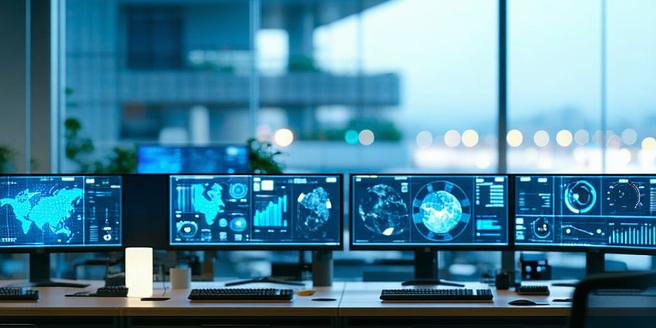
Understanding Smart Office Technologies
Smart office technologies are revolutionizing how we work by integrating advanced technology into the workplace to improve efficiency and productivity. These technologies encompass a range of solutions, including smart lighting, automated climate control, and advanced communication systems. By leveraging Internet of Things (IoT) devices, smart office systems can automate routine tasks, thereby reducing downtime and human error. Understanding these technologies is crucial as they change the dynamics of the modern workplace, providing tools that are not only efficient but also user-friendly and adaptable to the needs of a dynamic work environment. As these technologies evolve, so does the potential to dramatically reshape the way we conduct daily business operations, paving the way for more flexible, responsive, and intelligent work environments.
Benefits of Automating Office Environments
The automation of office environments offers numerous benefits that can transform organizational efficiency and productivity. By automating routine tasks, companies can significantly reduce labor costs and increase accuracy in operations. Automated systems enhance the ability to manage office resources more effectively, from energy usage to workflow processes. This transformation allows employees to focus on more strategic, creative, and value-added activities rather than mundane tasks. Moreover, automation can lead to better decision-making capabilities facilitated by data analytics integration. Enhancing employee satisfaction through the reduction of monotonous tasks is another advantage, as is the promotion of a more agile and responsive work environment. By embracing office automation, organizations position themselves at the forefront of innovation, setting a precedent for improved operational processes.
Key Devices in Office Automation
Office automation relies heavily on a set of intelligent devices designed to facilitate various functions within an office environment. Key devices include smart thermostats, which optimize energy use; automated lighting systems that adjust based on occupancy and daylight; and smart security systems that provide comprehensive protection through advanced surveillance and access control technologies. Additionally, conference room technologies, such as smart projectors and voice-activated assistants, play a pivotal role in enhancing collaboration and communication. Each of these devices interconnects through a central management system, allowing for seamless operation and control via smartphones or dedicated panels. Understanding the capabilities and applications of these devices is essential for businesses looking to streamline operations and create efficient, future-proof office spaces.
Integrating AI and IoT in Smart Offices
Integrating Artificial Intelligence (AI) and the Internet of Things (IoT) in smart offices represents a significant leap forward in creating responsive and efficient workspaces. AI algorithms process data from IoT devices to customize environments according to user preferences and habits, thus optimizing comfort and productivity. For instance, AI can intelligently adjust lighting, temperature, and other environmental factors based on occupancy patterns. This integration also enhances security measures and provides real-time data analytics for more informed decision-making. By combining AI and IoT, businesses can achieve a higher level of automation, resulting in cost savings, improved energy efficiency, and a more personalized and adaptable office setting. The seamless communication between devices and systems promises a more cohesive and responsive workplace, indicative of modern business needs.
Creating a Sustainable Smart Office
Creating a sustainable smart office involves integrating technology that promotes environmental responsibility while still improving office efficiency. Sustainable solutions include energy-efficient lighting and heating systems that automatically adjust based on environmental conditions and occupancy. Smart offices also employ sustainable materials and energy sources, such as solar panels, to minimize their carbon footprint. Waste reduction technologies, including automated recycling systems and paperless operation processes, also contribute significantly to sustainability efforts. A sustainable smart office not only benefits the environment but can also reduce operational costs in the long term. Businesses that embrace sustainability can enhance their brand reputation and meet regulatory compliance related to environmental standards. By fostering a green office environment, companies can also improve employee wellbeing and morale, reflecting a commitment to both ecological and social responsibility.
Future Trends in Office Automation
As technology continues to evolve, the future of office automation promises to deliver even more sophisticated solutions tailored to the changing needs of the workplace. Emerging trends point toward increased integration of AI and machine learning, where systems can predict and adapt to user needs with minimal input. The use of virtual and augmented reality technologies is also anticipated to enhance collaboration and training experiences. Furthermore, advancements in natural language processing will enable more intuitive interactions with automated systems. Another trend is the rise of decentralized, remote office environments supported by cloud technology and robust communication networks. These innovations will continue to push the boundaries of what’s possible in office automation, underscoring the importance for businesses to stay informed and adaptable in this rapidly changing landscape.