Ai In Disaster Response
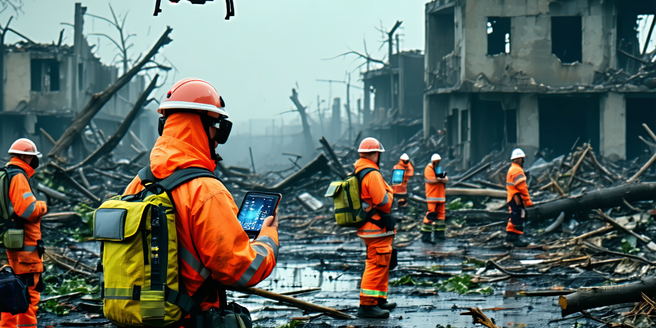
Understanding AI in Emergency Management
AI has become an integral part of emergency management, profoundly enhancing the ability to predict, respond, and recover from disasters. Through the power of machine learning algorithms and data analytics, AI can process vast amounts of data in real-time, offering actionable insights for disaster response teams. By analyzing patterns in weather systems, for example, AI can predict potential natural disasters, enabling early warnings and evacuations. Moreover, AI’s ability to integrate with various data sources allows for a comprehensive understanding of a situation, aiding in resource allocation and recovery efforts. Emergency managers can also employ AI for risk assessment, improving decision-making processes. However, while AI boasts transformative potential, it is crucial to ensure its outputs remain reliable, particularly in high-stakes scenarios where lives and resources are at risk.
Key Benefits of AI in Disaster Response
Incorporating AI into disaster response strategies offers several key benefits that enhance overall efficiency and effectiveness. AI automates routine tasks, freeing up human resources for critical decision-making and strategic planning. By analyzing data from multiple sources, AI can identify trends and predict events more accurately than traditional methods, enhancing preparedness and response times. The technology’s real-time data processing capabilities ensure that response teams have up-to-date situational awareness, crucial for deploying resources swiftly and effectively. AI also assists in post-disaster recovery by optimizing resource distribution and rebuilding efforts based on data-driven insights. Additionally, AI-driven communication platforms improve coordination among agencies and streamline information dissemination during crises. Together, these benefits result in more agile, informed, and effective disaster response operations, ultimately saving lives and minimizing damage.
Real-World Applications of AI in Crises
AI’s application in crises spans various contexts, demonstrating its versatility and impact. One significant application is in the deployment of autonomous drones for search and rescue missions. These drones, equipped with AI technology, can navigate through challenging terrains and identify survivors, directing rescue teams efficiently. AI is also applied in disaster risk reduction, where systems analyze environmental data to predict earthquakes or floods, alerting authorities and communities. During health emergencies, AI algorithms monitor the spread of diseases, assisting in containment strategies. Organizations like the Red Cross employ AI for logistics, optimizing the delivery of supplies and reducing response times. Furthermore, AI is used in social media monitoring to detect sentiment and real-time needs during events, enabling agile responses. These applications showcase AI’s pivotal role in modern disaster management frameworks.
Challenges and Limitations of AI Technologies
Despite its many advantages, AI technologies face significant challenges and limitations in disaster management contexts. One primary concern is the quality and reliability of data inputs; biased or incomplete data can lead to incorrect predictions and actions. Ensuring data security and privacy is another challenge, as sensitive information is often handled during crises. The lack of transparency in AI algorithms, commonly known as the ‘black box’ problem, can hinder the understanding of decision-making processes, making it difficult for humans to fully trust AI-driven recommendations. Additionally, the deployment of AI systems requires substantial infrastructure and technological resources, which may be lacking in developing regions most vulnerable to disasters. Addressing these challenges involves developing robust governance frameworks, promoting interoperability, and advancing algorithmic transparency to enhance AI’s effectiveness and trustworthiness in disaster scenarios.
Future Trends in AI-Driven Disaster Preparedness
As AI technologies continue to evolve, future trends in AI-driven disaster preparedness are poised to revolutionize current practices. The integration of AI with the Internet of Things (IoT) is expected to enhance sensor networks for better data collection and situational awareness. Predictive analytics will become more sophisticated, enabling even earlier warnings and more effective risk mitigation strategies. Moreover, AI systems are likely to evolve into more autonomous entities capable of making independent decisions during crises, reducing the burden on human responders. Advances in natural language processing will improve communication between AI tools and human operators, paving the way for more intuitive interfaces. Additionally, as ethical considerations gain prominence, frameworks for responsible AI use in disaster contexts are expected to be developed, ensuring equitable and unbiased deployment. These trends underscore AI’s transformative potential in enhancing disaster preparedness.
Collaborative Efforts Enhancing AI Efficacy
The efficacy of AI in disaster response is significantly amplified through collaborative efforts. Partnerships between governments, private sector companies, and nonprofit organizations play a crucial role in advancing AI technologies and their application in emergency management. By sharing data and resources, these collaborations foster innovation and improve AI systems’ capabilities. Joint training programs and workshops help bridge knowledge gaps, enabling stakeholders to utilize AI tools effectively and responsibly. Additionally, global networks and initiatives aim to standardize AI practices and develop ethical guidelines, further supporting its integration into disaster management. Community engagement is also vital, as it ensures AI solutions address local needs and contexts. Through cooperation and knowledge exchange, these collaborative efforts can enhance the resilience and responsiveness of disaster management frameworks, ultimately leading to more effective AI-driven disaster preparedness and response strategies.