Augmented Reality Glasses
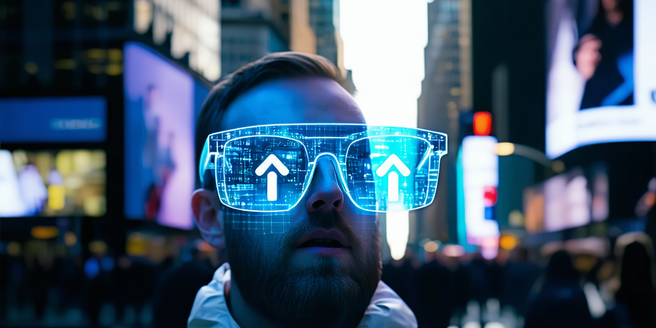
Introduction to Augmented Reality Glasses
Augmented Reality (AR) Glasses are at the forefront of modern technology, providing an immersive experience by overlaying digital information onto the real world. Unlike virtual reality, which creates a completely artificial environment, AR enhances the user’s perception of their surroundings. These glasses are equipped with sensors, cameras, and processors to understand the user’s environment and project relevant data onto the lenses. As a result, users can interact with their environment in previously unimaginable ways. This fusion of reality with digital elements opens up new possibilities in various fields such as gaming, education, and professional applications. The adoption of AR glasses is expected to grow as the technology becomes more sophisticated and accessible, offering users a seamless blend of the digital and physical worlds.
How Augmented Reality Glasses Work
AR glasses function by incorporating various components such as cameras, sensors, and displays. Cameras capture the surrounding environment while sensors detect user movements and positioning. The captured data is then processed by algorithms to understand the context and adjust the digital overlays accordingly. The displays, which are often transparent lenses or micro-projected screens, present this digital information to the user. This creates a layer of digital interaction that complements the real world. The degree of sophistication in AR glasses can vary, ranging from basic display of text to complex 3D models and animations. Users often find them valuable in fields like gaming, education, and industrial training. The ability to project interactive 3D graphics in real-time is what sets AR glasses apart from traditional displays.
Key Features of Modern AR Glasses
Modern AR glasses boast a range of impressive features to enhance user experience. One key feature is hands-free interaction, allowing users to engage with digital content without the need for external devices. Advanced tracking capabilities enable precise alignment of digital overlays within the real world, providing a seamless integration. Many AR glasses also come with voice recognition, enabling voice commands for easier navigation and control. Battery life and wireless connectivity are important features, ensuring uninterrupted use during daily activities. The glasses are increasingly designed to be lightweight and stylish, making them comfortable and fashionable for everyday wear. With continual improvements in optics and processor capabilities, modern AR glasses offer a rich, immersive experience unlike any other.
Applications and Use Cases for AR Glasses
AR glasses have a wide range of applications across different industries. In retail, they can provide customers with augmented product information or virtual try-ons. In education, they offer interactive and immersive learning experiences that can bring textbook content to life. Healthcare professionals can use AR glasses for real-time data visualization during surgeries or for training simulations. In manufacturing, these glasses assist workers by projecting assembly instructions or safety guidelines directly onto their field of view. AR glasses are also pivotal in gaming, providing an augmented gaming environment that enhances the player’s experience. As the technology evolves, the use cases are expected to expand, transforming how we interact with digital content across various domains.
Future Trends in Augmented Reality Technology
The future of augmented reality technology is set to bring even more exciting developments. One trend is the integration with artificial intelligence, enhancing the glasses’ ability to process and respond to the environment intelligently. There is also ongoing development in improving the ergonomics and aesthetics of AR glasses, making them indistinguishable from regular eyewear. Advances in connectivity, including 5G, will enable AR glasses to quickly access vast amounts of data from the cloud, enriching the user experience. Furthermore, advancements in display technology will likely allow for higher resolution and more immersive visual experiences. As augmented reality technology matures, it is anticipated to play an integral role in everyday life, fundamentally changing how we interact with the world around us.