Augmented Reality Glasses Transforming Navigation
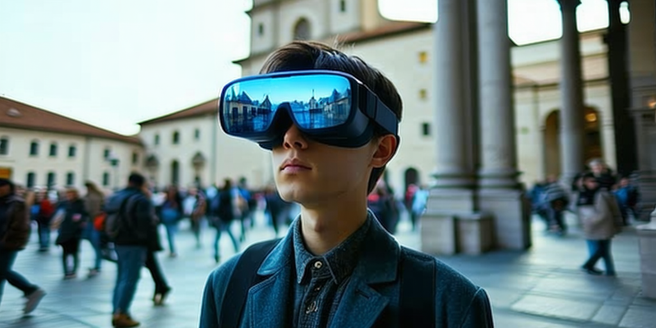
Exploring the Technology Behind AR Glasses
Augmented Reality (AR) glasses leverage advanced technologies to overlay digital information onto the physical world. These glasses incorporate sensors, cameras, and displays to synchronize virtual data with real-world environments. Core components include depth sensors that map surroundings, gyroscopes for tracking orientation, and integrated displays to visualize digital content directly in the user’s line of sight. The technology relies on computer vision and machine learning algorithms to process data in real-time, ensuring seamless integration of the digital and physical realms. The computational power packed into these compact devices handles complex tasks like image and object recognition, transforming how users perceive and interact with their surroundings. This technological convergence not only enhances user experience but also showcases the potential of AR glasses as powerful tools in navigation and beyond.
How AR Glasses Enhance Real-World Navigation
AR glasses revolutionize real-world navigation by providing intuitive, hands-free guidance. Unlike traditional navigation methods that rely on handheld devices, AR glasses project directions directly onto the user’s field of view, allowing for a more integrated experience. This immersive approach reduces cognitive load, enabling users to navigate complex environments more effectively. AR can overlay arrows or paths onto streets and display real-time updates about traffic conditions or points of interest. The ability to receive visual cues without diverting attention from the environment enhances situational awareness and safety. Furthermore, AR glasses can integrate with geolocation and mapping services, adapting quickly to changing routes and providing personalized guidance. This seamless blend of digital instructions and physical reality represents a significant advancement in navigation technology, enhancing the efficiency and enjoyment of moving through spaces.
Key Features and Benefits of AR Navigation
AR navigation offers several key features and benefits that elevate user experience and efficiency. One of the standout features is the augmented overlay, which projects directions and information onto the real world, minimizing distractions and enhancing focus. Users benefit from real-time updates on traffic, weather, and nearby amenities, all without taking their eyes off the road or pathway. Additionally, AR navigation supports hands-free operation, critical for driving or cycling, reducing the need for manual interaction with devices. Enhanced spatial awareness through AR assists in avoiding potential hazards, while its personalized guidance adapts to individual preferences and routes. These features collectively foster a safer, more informed travel experience. The ability to experience navigation in a more intuitive way not only saves time but also increases the practicality and enjoyment of daily commutes and travel.
Challenges and Solutions in AR Navigation
Despite its potential, AR navigation faces several challenges that need addressing for its widespread adoption. Technological limitations such as battery life and processing power can restrict prolonged use. Additionally, ensuring accurate environmental mapping and data representation is crucial to avoid disorientation. Privacy concerns also arise from the need for constant environmental scanning. Solutions include the development of energy-efficient components and the optimization of software algorithms to balance performance with power consumption. Improved sensor technologies and enhanced data privacy protocols can address accuracy and security issues. Collaborative efforts between tech developers and policymakers are crucial to creating regulatory frameworks that ensure AR navigation solutions are safe and effective. By overcoming these technical and ethical hurdles, AR navigation can revolutionize the way we interact with and move through the world.
Future Prospects for AR Glasses in Navigation
The future of AR glasses in navigation appears promising, with advancements poised to enhance efficiency and accessibility. Future innovations may include more compact and comfortable designs, with improved battery life and processing capabilities. Connectivity with Internet of Things (IoT) devices can offer integrated smart navigation solutions, enhancing user experience. Moreover, advancements in artificial intelligence can lead to more intuitive and adaptive navigation systems, capable of predicting user needs and preferences. The integration of voice commands and gesture controls may also enhance interactivity and ease of use. As technology evolves, AR glasses could become indispensable tools in various industries, from transportation to tourism, offering personalized, real-time navigation experiences. The continued development and availability of AR navigation solutions will likely redefine how we perceive and interact with our environments, revolutionizing the field of navigation.